
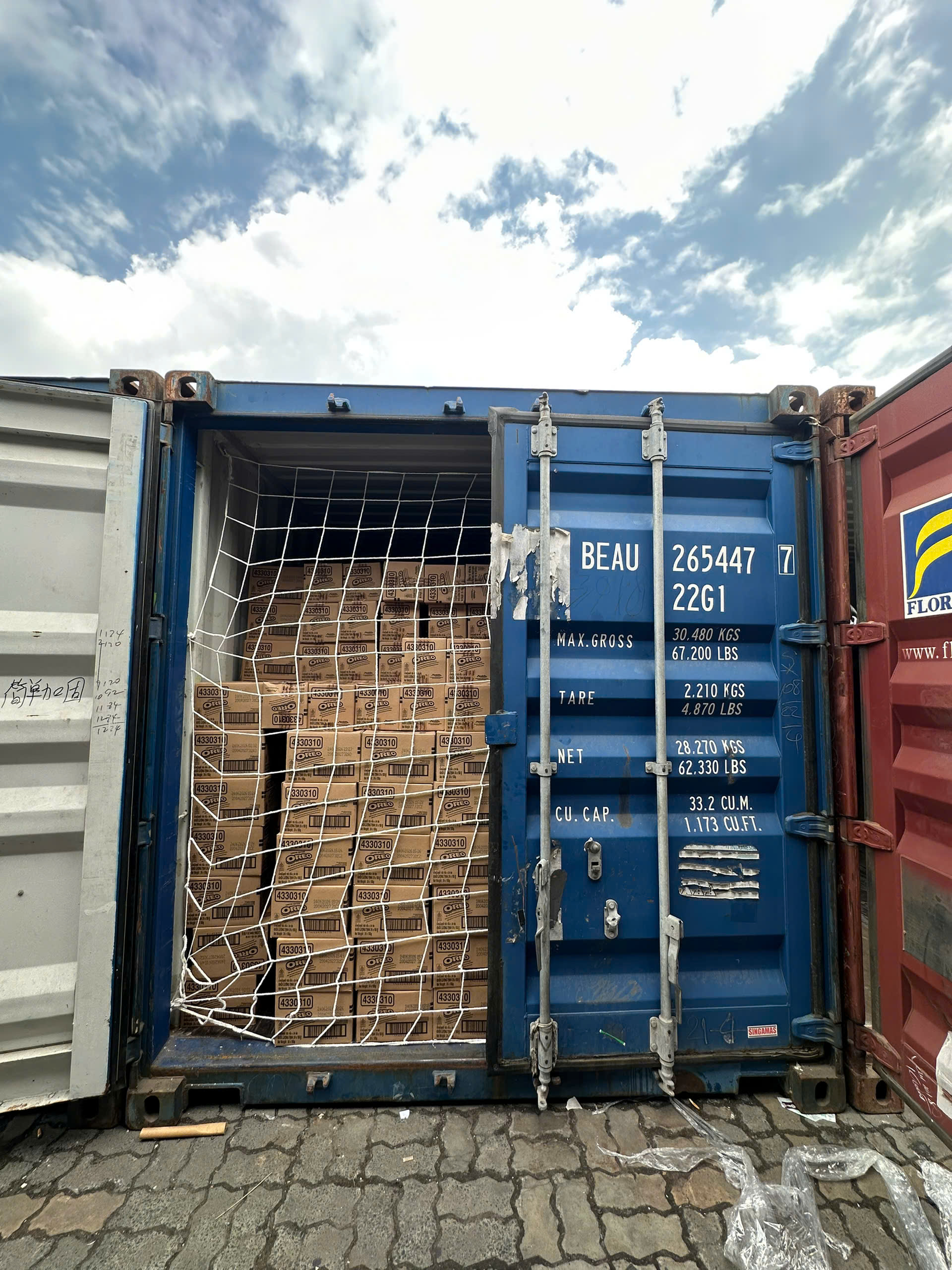

I. Executive Summary: Bridging Commercial Negotiation and Physical Distribution
Executing a flawless FMCG B2B wholesale container dispatch represents the absolute culmination of commercial strategy, client trust, and physical logistics excellence across modern trade networks. In the global fast-moving consumer goods sector, a signed sales contract is only as valuable as the physical supply chain that fulfills it. While closing high-volume commercial agreements with regional hypermarket networks, supermarket chains, and wholesale buyers is a major milestone, the true test of operational dominance occurs on the distribution floor.
+-----------------------------------------------------------------------------------+
|                  D&P CONSUMER CONTAINER FULFILLMENT MATRIX                        |
+-----------------------------------------------------------------------------------+
|  [ SALES DEAL CLOSE ]   ->  Negotiation, Volume Commitments & PO Finalization     |
|  [ BATCH AUDIT & FEFO ] ->  Lot Verification, Expiry Check & Quality Assurance    |
|  [ CONTAINER STAGING ]  ->  Pallet Engineering, Shrink Wrap & Weight Distribution |
|  [ CRITICAL LOADING ]   ->  Volumetric Efficiency & Structural Cargo Lock         |
|  [ SEAL & DISPATCH ]    ->  Tamper-Proof Lock, Port Routing & Real-Time Tracking  |
+-----------------------------------------------------------------------------------+
When a sales representative finalizes a purchase order with an international client at D&P Consumer, an automated operational sequence triggers across our fulfillment infrastructure. Every stage—from inventory staging and batch verification to container loading and final dispatch—is executed with rigorous mathematical precision. Pre-positioning goods and securing immediate shipping container allocations allows logistics divisions to eliminate route-to-market friction, protect cargo value, and maintain an uninterrupted flow of global consumer brands to active retail shelves.
Transforming commercial sales contracts into physical, containerized shipments within 24 to 48 hours is the primary operational benchmark that secures regional market leadership across modern trade networks.

Establishing a seamless transition between sales negotiation and freight movement safeguards enterprise margins for both distribution networks and commercial partners. Retail procurement directors require absolute predictability regarding delivery windows, lot numbers, and packaging conditions. By managing every aspect of cargo containment, weight balancing, and transit sealing under standardized protocols, D&P Consumer eliminates supply chain vulnerabilities and reinforces its reputation as an elite global partner.
II. The Commercial Pipeline: From Client Negotiation to Binding Purchase Order
The journey of an FMCG B2B wholesale container dispatch begins long before a shipping container reverses into our loading bays. It originates in commercial negotiations led by dedicated sales representatives, who work closely with enterprise buyers to analyze local market demand, SKU turnover rates, and seasonal consumption trends.
Aligning Client Volume Requirements with Stock Allocations
During the contract finalization phase, account teams work directly with corporate procurement managers to calibrate order volumes against specific shipping configurations. B2B buyers must optimize their shipping costs per unit, which requires tailoring purchase orders to match the maximum volumetric capacity of standard 20-foot and 40-foot High Cube (HC) shipping containers.
Account managers utilize automated catalog management systems to verify real-time warehouse inventory, lot production dates, and minimum order quantities (MOQs). This digital integration prevents over-allocation and ensures that every committed item is physically present in our distribution hubs, ready for immediate staging upon contract execution.
Structuring Transparent Commercial and Delivery Terms
Once the buyer approves the catalog selection, product mix, and pricing structure, the commercial team establishes clear delivery terms based on internationally recognized standards published by the International Chamber of Commerce Incoterms. Whether the agreement is structured under FOB (Free On Board), CIF (Cost, Insurance, and Freight), or DDP (Delivered Duty Paid), establishing precise risk transfer points protects both parties and accelerates customs manifest clearance.
- Order Specification Finalization: Locking in exact flavor ratios, unit case counts, and pallet arrangements with account directors.
- Credit and Payment Clearing: Verifying commercial letters of credit or direct wire transfers to trigger immediate inventory release from central repositories.
- Logistics Allocation Transfer: Automatically routing finalized order metrics from the sales management system to the warehouse management system (WMS).
III. Floor-Level Precision: Warehouse Staging and Quality Control Audits
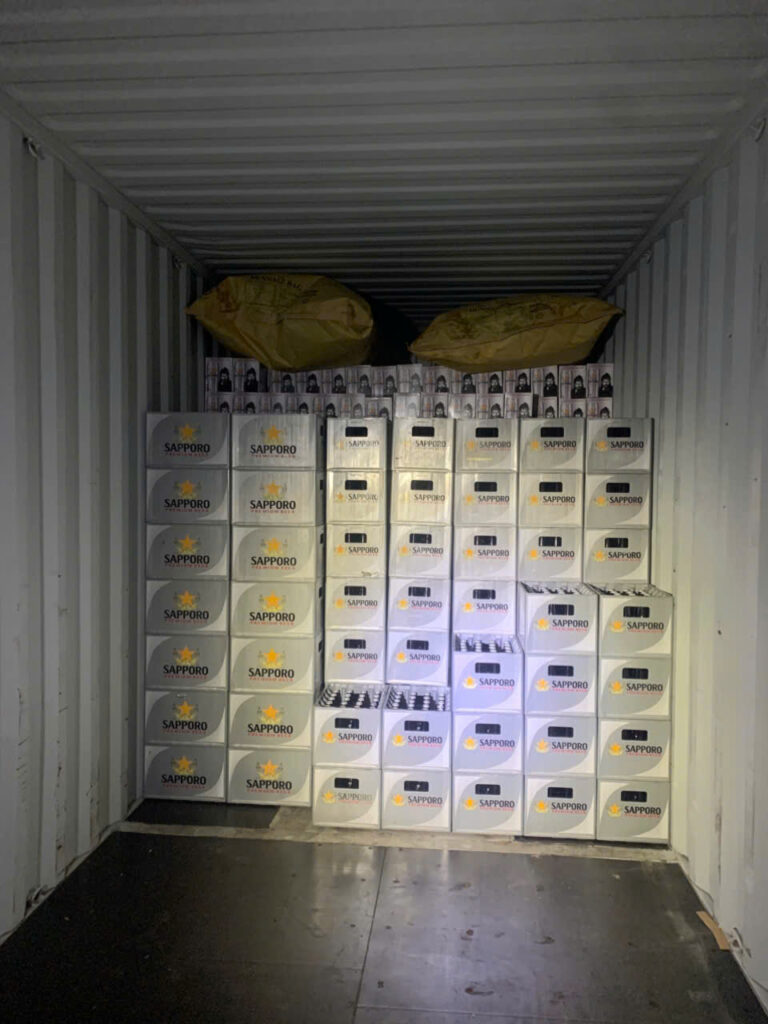
The moment a sales agreement transitions into an active warehouse order, physical operations begin at regional distribution hubs. Executing an FMCG B2B wholesale container dispatch requires strict adherence to international quality management systems, ensuring that every dispatched case meets regional regulatory standards and client expectations under the D&P Consumer brand commitment.
Alt Text: Warehouse team performing quality control and pallet verification for an FMCG B2B wholesale container dispatch.
1. Rigorous Batch Auditing and FEFO Compliance
Warehouse supervisors initiate the staging process by performing comprehensive batch audits. High-velocity consumer goods—including carbonated soft drinks, packaged confections, and personal care products—require strict First-Expired, First-Out (FEFO) inventory rotation.
+--------------------------------------------------------------------+
|                  FEFO QUALITY ASSURANCE MATRIX                     |
+--------------------------------------------------------------------+
|  [LOT IDENTIFICATION]  -> Scan barcode to verify production batch  |
|  [SHELF-LIFE CHECK]   -> Confirm minimum 85% remaining shelf life  |
|  [PACKAGING INSPECTION]-> Audit master cartons for structural wear |
|  [BARCODE VALIDATION]  -> Ensure EAN/UPC compliance for target market|
+--------------------------------------------------------------------+
Floor technicians scan individual pallet barcodes to verify production dates and confirm that all items maintain at least 85% of their total shelf life prior to container loading. Master cases undergo physical inspections to identify and remove any cartons showing minor cosmetic creasing, surface scuffs, or tape degradation. Maintaining clean packaging graphics is essential for safeguarding on-shelf consumer desirability once cargo reaches destination retail displays.
2. Pallet Engineering and Structural Reinforcement
Packaged consumer goods face intense physical stress during long-distance transit. To insulate cargo against multi-axis vibration, acceleration forces, and humidity fluctuations, staging teams apply advanced pallet engineering protocols:
- High-Tensile Stretch Wrapping: Applying automated, multi-layer stretch film under continuous tension to bind individual cases into a rigid, monolithic block.
- Heavy-Duty Corner Boards: Positioned on all four vertical edges of the pallet stack to distribute vertical compression loads and prevent carton crushing inside the freight grid.
- Moisture Barrier Top Sheets: Polyethylene covers placed on top of pallet stacks to shield cargo against condensation build-up inside marine containers during temperature shifts.
IV. Container Loading Mechanics: Volumetric Efficiency and Load Balancing
Loading freight into a marine shipping container is a precise engineering task. A poorly loaded container can lead to product damage, dynamic instability during transport, and severe safety hazards during offloading at the destination port. Executing a successful FMCG B2B wholesale container dispatch relies on calculated floor placement and strict volumetric optimization developed by experienced logistics engineers.
1. Mathematical Weight Balancing Across Container Axles
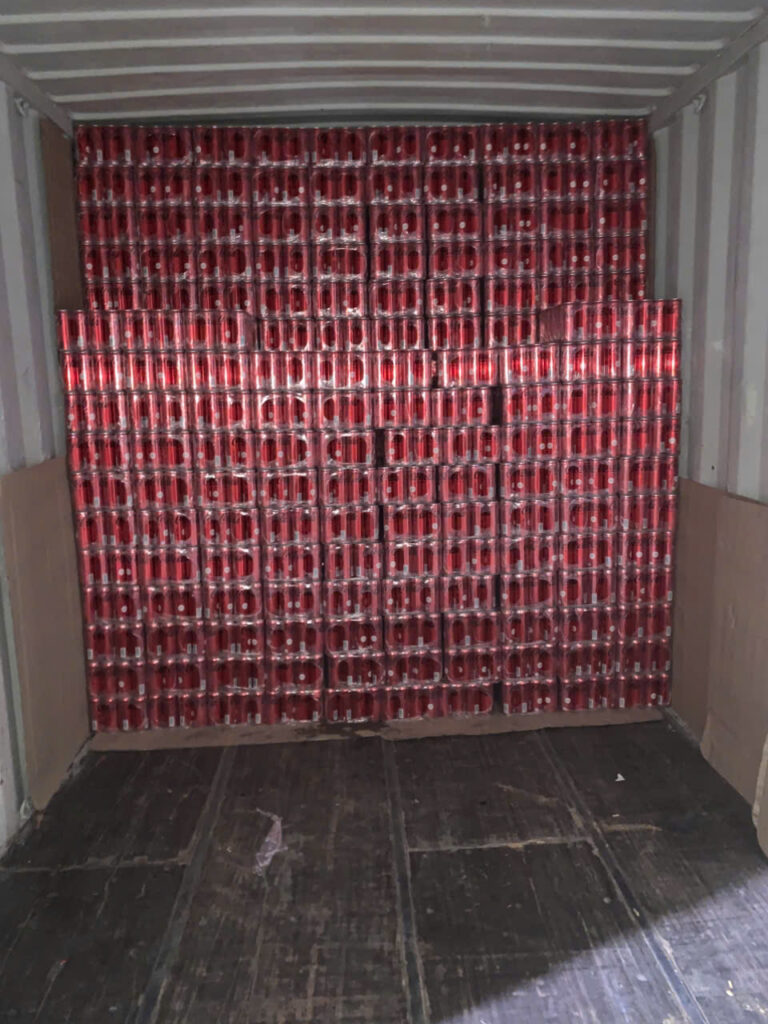
Heavy liquid goods, such as aluminum canned beverages or glass-bottled imports, present unique payload density challenges. Loading heavy items exclusively at one end of a container creates dangerous weight imbalances that violate highway transport regulations and destabilize port handling equipment.
+--------------------------------------------------------------------+
|               OPTIMIZED LOAD BALANCING MATRIX                      |
+--------------------------------------------------------------------+
|  [FRONT ZONE]  -> Medium-Density Cargo (PET Bottles / Multi-Packs) |
|  [CENTER ZONE] -> High-Density Heavy Payload (Canned Beverages)    |
|  [REAR ZONE]   -> Low-Density Light Payload (Confectionery/Snacks)  |
+--------------------------------------------------------------------+
|  RESULT: Center-of-Gravity alignment satisfying ISO transport rules |
+--------------------------------------------------------------------+
Logistics teams utilize specialized container loading software to model cargo weight distribution prior to physical loading. Heavy beverage trays are positioned centrally across the floor space over the container’s primary structural cross-members, while lighter packaged foods and dry confections occupy upper tiers and end zones. This load balancing maintains an optimal center of gravity, satisfying safety guidelines mandated by the International Organization for Standardization (ISO).
2. Eliminating Internal Cargo Shifting with Dunnage Protocols
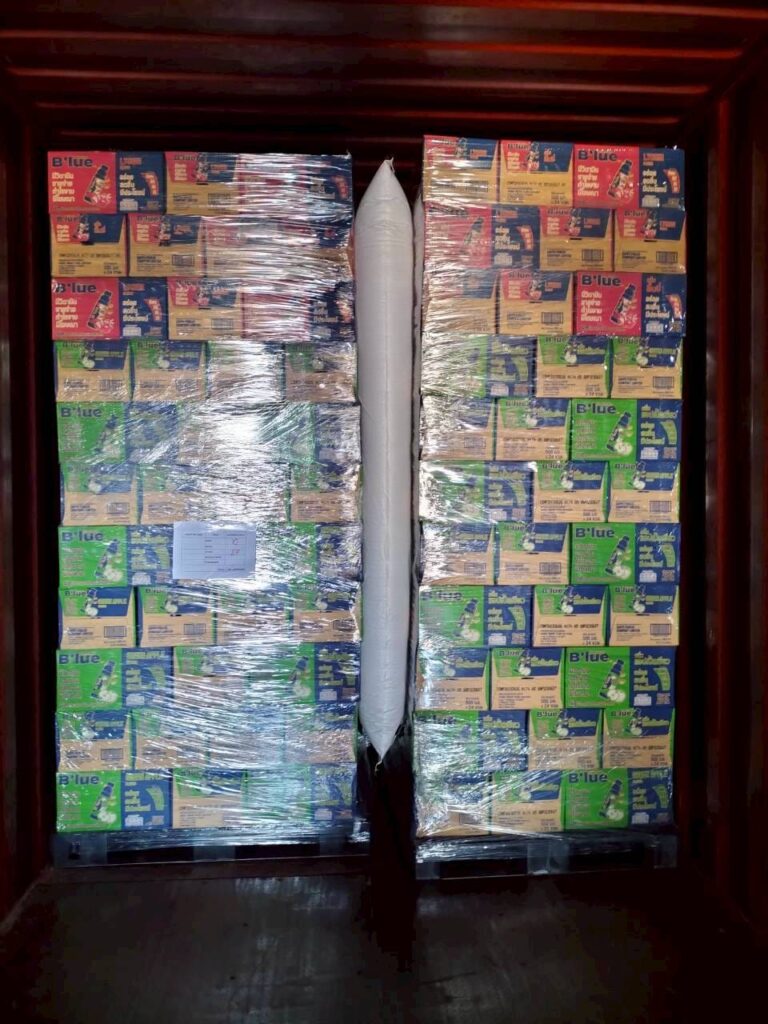
Empty space inside a loaded container is the primary cause of transit damage. As cargo ships roll at sea or trucks brake abruptly on land, unanchored pallets can slide, lean, or collapse. Loading crews deploy comprehensive cargo securing protocols to eliminate internal movement:
- Inflatable Friction Airbags: Inserted into vertical gaps between pallet rows and inflated to create uniform lateral pressure, locking the cargo against the container walls.
- Anti-Slip Friction Mats: Placed beneath the wooden pallet bases to increase floor grip and resist horizontal displacement during ocean transit.
- Lashing and Webbing Straps: Anchored directly to the container’s internal steel tie-down rings across the rear doorway to hold the final cargo face securely in place.
V. Safeguarding Cargo Value: Climate Control and Seal Integrity
Protecting cargo value during an FMCG B2B wholesale container dispatch requires maintaining optimal internal environmental conditions and enforcing strict chain-of-custody security. Consumer packaged goods are highly sensitive to thermal spikes, moisture accumulation, and unauthorized access during cross-border transit across the D&P Consumer commercial corridor.
Environmental Protection Against Container Rain
When containers travel through varying climatic zones, ambient temperature drops cause moisture in the air to condense on internal steel ceilings—a phenomenon known as “container rain.” If unmanaged, condensation drips onto paperboard cartons, causing packaging collapse and mold growth.
To combat humidity risk, crews equip every dispatched container with specialized high-absorption desiccant bags containing calcium chloride. These desiccant packs absorb up to 300% of their weight in moisture, maintaining internal relative humidity levels well below the dew point throughout marine transit.
Chain-of-Custody Security and Tamper-Proof Bolt Sealing
Once the loading crew completes cargo placement and verifies the final packing manifest, the container doors are locked and sealed. Applying high-security, ISO-compliant bolt seals is a non-negotiable step in our supply chain protocol.
- Visual Door Inspection: Verifying that rubber door gaskets are intact, clean, and capable of forming a watertight seal.
- Bolt Seal Locking: Inserting a heavy-duty, numbered steel bolt seal through the primary door locking mechanism until it clicks into a permanent, non-reversible lock.
- Serialized Digital Logging: Scanning the bolt seal’s unique identification number directly into the dispatch manifest and uploading the data to the client tracking portal.
Breaking a bolt seal requires heavy-duty bolt cutters, ensuring that any unauthorized attempt to open the container during transit is immediately detectable by port customs officials and receiving warehouse managers.
VI. Route Optimization, Customs Acceleration, and Export Logistics
Dispatching a container from the warehouse is only half the battle; ensuring swift navigation through ocean terminals, border checkpoints, and customs hubs completes the fulfillment cycle. The export compliance division manages shipping manifests, regulatory documentation, and carrier booking slots to prevent transit bottlenecks.
Streamlining Export Documentation for Instant Customs Clearance
Customs holds and administrative delays at destination ports create severe demurrage fees and disrupt retail stocking schedules. Operations teams mitigate regulatory risk by executing pre-manifest documentation verification before the container arrives at the port terminal.
- Bill of Lading (B/L) Generation: Accurately documenting shipper, consignee, cargo weight, volumetric measurements, and container numbers.
- Commercial Invoice and Packing List Serialization: Itemizing SKU descriptions, harmonized system (HS) tariff codes, unit values, and lot production numbers.
- Certificates of Origin and Health Compliance: Securing necessary sanitary, phytosanitary, and free-sale certificates required by destination country market regulators.
By integrating automated document processing with international customs portals, distribution hubs accelerate import clearance workflows, allowing commercial shipments to transition directly from vessel discharge to inland trucking fleets without spending unnecessary days in port holding yards.
VII. Real-Time Telemetry and B2B Client Transparency
Modern enterprise buyers demand total visibility into their supply chains. An FMCG B2B wholesale container dispatch is fully integrated with digital client reporting systems, providing real-time tracking data from the moment cargo leaves our loading bays.
Automated Tracking via the B2B Enterprise Portal
Through a secure client interface, wholesale buyers can monitor their shipment’s status in real time. The digital portal consolidates critical logistics telemetry into an easy-to-read dashboard:
+-----------------------------------------------------------------------+
|                    CLIENT TELEMETRY DASHBOARD                         |
+-----------------------------------------------------------------------+
|  CONTAINER ID   : TEMU8492015                                         |
|  BOLT SEAL NO   : DP-99201482                                         |
|  ORIGIN HUB     : D&P Consumer Central Logistics Hub                  |
|  DESTINATION    : Port of Singapore / Regional Distribution Center    |
|  CURRENT STATUS : Manifest Cleared | Vessel Loading In Progress       |
|  EST. ARRIVAL   : August 12, 2026 - 08:30 SGT                           |
+-----------------------------------------------------------------------+
Providing transparent access to tracking metrics, digital bills of lading, and high-resolution loading photos allows retail procurement teams to plan their internal warehouse staging and store delivery schedules accurately. This level of operational clarity minimizes administrative back-and-forth and strengthens long-term commercial relationships.
VIII. Strategic Impact: Accelerating Stock Turn Ratios for Retail Chains
The efficiency of an FMCG B2B wholesale container dispatch directly impacts the financial performance of retail storefronts and regional wholesale networks. In the fast-paced retail landscape, maintaining optimal inventory levels without over-leveraging working capital is the key to sustained profitability.
+--------------------------------------------------------------------+
|               THE RETAIL VALUE CREATION CYCLE                      |
+--------------------------------------------------------------------+
|  [FAST DISPATCH]      -> Minimizes transit lead time               |
|  [FEFO ROTATION]     -> Maximizes remaining store shelf life       |
|  [PRISTINE CARGO]     -> Drives immediate on-shelf consumer sales   |
|  [HIGH VELOCITY]      -> Accelerates cash-conversion cycle (CCC)   |
+--------------------------------------------------------------------+
1. Eliminating Out-of-Stock Scenarios Across Modern Trade Rows
When a popular carbonated beverage, snack brand, or seasonal product line runs out of stock, retailers suffer immediate revenue loss and run the risk of consumers switching to competing brands. Rapid dispatch protocols ensure that high-velocity products arrive at retail distribution centers before store shelves run dry.
2. Compressing the Cash-Conversion Cycle (CCC)
By reducing order-to-delivery lead times, streamlined logistics help corporate buyers compress their Cash-Conversion Cycle (CCC). Retailers can convert inventory into active consumer purchases faster, improving overall liquidity and enabling them to reinvest capital into upcoming product lines without delay.

IX. Comprehensive Container Dispatch Specifications & Cargo Capabilities
To satisfy diverse commercial requirements, D&P Consumer supports multiple shipping container configurations tailored to specific product categories, volume targets, and transport conditions.
| Container Format | Volumetric Capacity | Maximum Payload Weight | Ideal Product Categories | Primary Protective Safeguards |
| 20ft Standard Dry | ~33.2 cubic meters | 21,700 kg | Heavy Liquid Assets, Canned Beverages, Glass Bottles | Floor weight distribution plates, heavy-duty door lashing |
| 40ft High Cube (HC) | ~76.4 cubic meters | 26,500 kg | Packaged Confectionery, Dry Snacks, Personal Care Lines | Lateral friction air bags, anti-collapse vertical netting |
| 40ft Refrigerated (Reefer) | ~67.3 cubic meters | 26,000 kg | Temperature-Sensitive Chocolates, Dairy Products | Active digital temperature logging, airflow floor channels |
X. The 5-Phase Dispatch Lifecycle Playbook
Executing an FMCG B2B wholesale container dispatch with zero operational errors requires following a standardized lifecycle playbook. Every order fulfilled passes through five distinct operational gates:
+-----------------------------------------------------------------------------------+
|                     THE 5-PHASE DISPATCH LIFECYCLE PLAYBOOK                       |
+-----------------------------------------------------------------------------------+
|  PHASE 1: Commercial Contract Execution & Order Parameter Locking                 |
|  PHASE 2: Inventory Auditing, FEFO Batch Selection & Pallet Staging               |
|  PHASE 3: Precision Container Loading, Weight Balancing & Dunnage Security        |
|  PHASE 4: Environmental Protection, High-Security Bolt Sealing & Manifest Audit   |
|  PHASE 5: Port Dispatch, Customs Acceleration & Real-Time Client Telemetry        |
+-----------------------------------------------------------------------------------+
Phase 1: Commercial Contract Execution & Order Parameter Locking
Sales representatives confirm purchase order metrics, MOQ ratios, pricing tiers, and delivery terms with the client. Order specifications are locked into the enterprise portal to initiate automated warehouse allocation.
Phase 2: Inventory Auditing, FEFO Batch Selection & Pallet Staging
Warehouse teams locate and audit target stock, verifying lot numbers, expiration dates, and packaging integrity. Pallets are reinforced with high-tensile stretch film, corner boards, and top-layer moisture barriers.
Phase 3: Precision Container Loading, Weight Balancing & Dunnage Security
Floor specialists load cargo according to calculated weight distribution diagrams. High-density items are positioned over structural chassis members, and inflatable dunnage bags are installed to lock pallet rows in place.
Phase 4: Environmental Protection, High-Security Bolt Sealing & Manifest Audit
Desiccant packs are deployed to regulate internal humidity. Doors are closed and secured using ISO-compliant, numbered bolt seals. Seal numbers and loading photos are logged into the shipping manifest.
Phase 5: Port Dispatch, Customs Acceleration & Real-Time Client Telemetry
Containers are transported to the port terminal via specialized drayage fleets. Customs pre-manifest documentation is submitted electronically, and real-time tracking data goes live on the digital portal.
XI. Strategic Synthesis: Driving Global Retail Scalability with D&P Consumer
Achieving long-term leadership in the competitive fast-moving consumer goods industry requires combining strong commercial capabilities with seamless logistical execution. The success of an FMCG B2B wholesale container dispatch highlights our ability to translate sales agreements into secure, high-velocity distribution runs that empower retail partners across regional markets.
By maintaining rigorous standards across batch auditing, container weight engineering, cargo security, and export documentation, D&P Consumer removes the operational friction that typically slows international supply chains. As global brands continue to expand their footprint, partnering with an authorized distributor that owns its fulfillment execution guarantees supply stability, protects brand equity, and drives consistent, profitable growth for modern trade networks worldwide.
FMCG Container Dispatch FAQ
Disclaimer: Unless otherwise stated, the images used in this article are the property of their respective owners. We do not claim ownership of any third-party images featured, and they are used here strictly for informational and educational purposes. If you are the copyright holder and wish to have an image removed, please contact us.



