
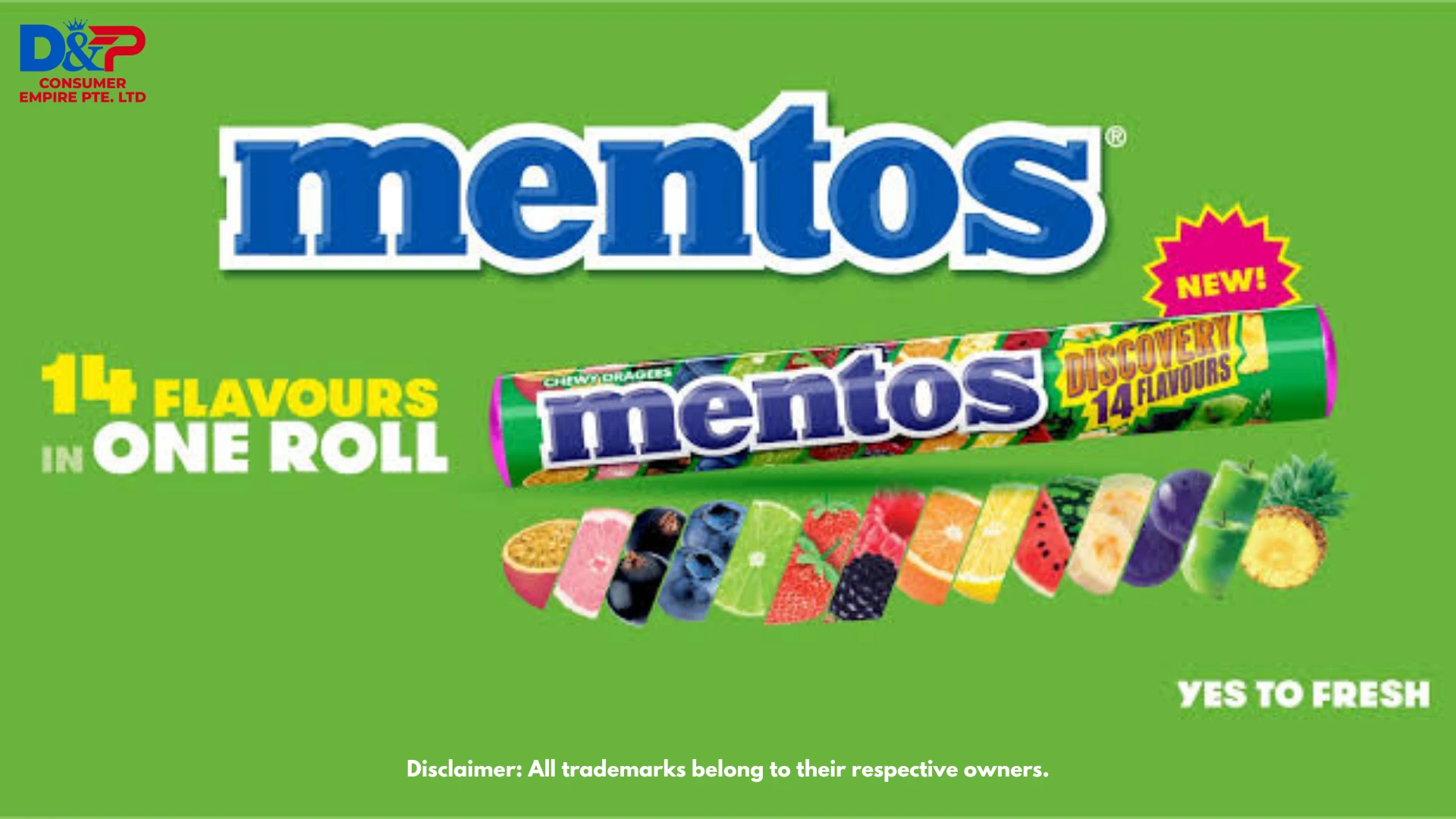

Evaluating Mentos Chewing Gum Facts provides essential technical data for B2B confectionery buyers, food scientists, retail category managers, and wholesale importers. Understanding the elastomeric gum base physics, sugar-free polyol chemistry, liquid center-filled technology, and sensory cooling mechanics of Mentos Gum is critical when evaluating product performance, formulation positioning, and regulatory compliance for international distribution.
Mentos represents one of the world’s most scientifically advanced chewing gum brands. Manufactured by Perfetti Van Melle, Mentos Gum disrupted the traditional stick-gum market by popularizing rigid bottles containing liquid-filled, crisp-shelled sugar-free dragées (pellets). This technical guide analyzes the chemical, physical, and sensory facts governing Mentos Chewing Gum formulations.
Table of Contents
- The Innovation History of Perfetti Van Melle and Mentos Gum
- Elastomeric Gum Base Physics and Mastication Science
- Sugar-Free Polyol Chemistry: Xylitol, Sorbitol, and Maltitol
- Liquid Center-Filled Technology and Flavor Burst Mechanics
- Shelf-Life Stability, Moisture Migration, and Fat Bloom Prevention
- Frequently Asked Questions (FAQ)

1. The Innovation History of Perfetti Van Melle and Mentos Gum
The Mentos brand originated in the Netherlands in 1932, created by brothers Michael and Pierre van Melle as a peppermint caramel candy. Following the merger of Van Melle (Netherlands) and Perfetti (Italy) in 2001, the newly formed Perfetti Van Melle (PVM) conglomerate leveraged its combined R&D power to enter the chewing gum category.
Mentos Chewing Gum launched globally in the mid-2000s. Rather than competing directly in the traditional stick-gum space, PVM introduced a multi-layered, liquid-filled sugar-free pellet packed in distinctive, car-cup-holder-friendly plastic bottles. This architectural innovation transformed consumer chewing gum habits globally.
2. Elastomeric Gum Base Physics and Mastication Science
Chewing gum is technically a non-Newtonian, viscoelastic polymer system. The performance of Mentos Gum depends entirely on its proprietary “gum base.”
Synthetic Elastomers and Resins
Modern Mentos gum bases are formulated using food-grade synthetic elastomers (such as polyisobutylene and polyvinyl acetate). These polymers are highly stable, non-digestible, and completely inert.
- Resin Binders: Natural or synthetic resins are blended with elastomers to bind the matrix together and dictate the “chewiness” or bounce of the gum.
- Plasticizers and Waxes: Microcrystalline waxes and plasticizers (like glycerin) are folded into the matrix to lower the glass transition temperature of the polymers, ensuring the gum becomes soft and pliable instantly upon exposure to mouth heat (37°C).

3. Sugar-Free Polyol Chemistry: Xylitol, Sorbitol, and Maltitol
Mentos Gum is formulated primarily as a sugar-free product to combat dental caries and appeal to health-conscious consumers. Sweetness and structural bulk are provided by Polyols (Sugar Alcohols).
Xylitol and Endothermic Cooling
Xylitol is a 5-carbon sugar alcohol used extensively in the outer crisp shell of Mentos Gum.
- Negative Heat of Solution: When Xylitol dissolves in saliva, it undergoes a highly endothermic reaction (absorbing heat from its surroundings). This creates an immediate, physical chilling sensation on the tongue.
- Dental Health: Xylitol cannot be fermented by Streptococcus mutans (plaque-causing bacteria), effectively starving the bacteria and preventing acid production that leads to tooth decay.
Sorbitol and Maltitol Bulking Agents
Sorbitol and Maltitol form the structural bulk of the internal gum matrix. They dissolve slowly during mastication, providing a steady, long-lasting release of sweetness that extends the flavor duration far beyond traditional sugar-based gums.
4. Liquid Center-Filled Technology and Flavor Burst Mechanics
The defining feature of Mentos Pure Fresh gum is its liquid-filled center.
- Co-Extrusion Manufacturing: Mentos liquid-center gum is produced using advanced co-extrusion machinery. A hollow rope of gum base is continuously extruded while a liquid flavor syrup (containing green tea extracts, glycerin, and high-intensity sweeteners like Aspartame or Sucralose) is injected simultaneously into the center.
- Flavor Burst Dynamics: The liquid core contains highly volatile flavor esters. Upon the first bite, the physical rupture of the liquid core floods the palate with concentrated flavor, delivering an immediate sensory “burst” that masks the slower flavor release of the surrounding elastomeric gum base.
5. Shelf-Life Stability, Moisture Migration, and Fat Bloom Prevention
Maintaining the physical integrity of a liquid-filled, crisp-shelled pellet requires precise thermodynamic engineering:
Moisture Migration Control
The liquid core contains high moisture activity, while the outer Xylitol shell must remain bone-dry to maintain its crunch. Perfetti Van Melle engineers a hydrophobic lipid barrier between the liquid center and the outer shell, preventing internal moisture from migrating outward and turning the crisp shell soggy over a 24 to 36-month shelf life.
Hard Panning and Carnauba Wax Polishing
The final manufacturing step involves “hard panning,” where gum pellets are tumbled in large drums and sprayed with hundreds of microscopic layers of liquid Xylitol. The pellets are finally polished with natural Carnauba Wax, providing a brilliant glossy shine and an absolute barrier against atmospheric humidity.
Mentos Chewing Gum Scientific & Technical FAQ
Disclaimer: Unless otherwise stated, the images used in this article are the property of their respective owners. We do not claim ownership of any third-party images featured, and they are used here strictly for informational and educational purposes. If you are the copyright holder and wish to have an image removed, please contact us.



