


Evaluating Sensodyne Toothpaste Facts provides essential technical data for B2B oral care buyers, dental professionals, cosmetic chemists, retail category managers, and wholesale importers. Understanding the desensitizing neuro-chemistry, stannous fluoride enamel mechanics, bioactive NovaMin tubule occlusion technology, and safety metrics of Sensodyne toothpaste is critical when evaluating product efficacy, variant positioning, and regulatory compliance for international distribution.
Sensodyne represents the world’s most clinically researched therapeutic oral care brand. Developed originally in 1961 by Block Drug (now owned by Haleon), Sensodyne formulations combine effective plaque-removal silica abrasives with advanced pharmaceutical-grade active ingredients to combat dentin hypersensitivity. This technical guide analyzes the chemical, physical, and medical facts governing Sensodyne toothpaste formulations.
Table of Contents
- The Clinical History of Sensodyne and Dentin Hypersensitivity
- Potassium Nitrate Chemistry: Nerve Depolarization Mechanics
- NovaMin Calcium Phosphate Technology: Bioactive Tubule Occlusion
- Stannous Fluoride Science: Smear Layers and Enamel Protection
- Relative Dentin Abrasivity (RDA) and Shelf-Life Physics
- Frequently Asked Questions (FAQ)
1. The Clinical History of Sensodyne and Dentin Hypersensitivity
Dentin hypersensitivity (tooth sensitivity) is characterized by short, sharp pain arising from exposed dentin in response to stimuli—typically thermal (hot/cold ice cream), evaporative (breathing cold air), tactile (brushing), or osmotic (sugary foods).
The Hydrodynamic Theory of Tooth Pain
Underneath the hard, protective tooth enamel lies the dentin, a softer tissue containing thousands of microscopic channels called dentinal tubules that lead directly to the tooth’s inner nerve pulp. When enamel wears away (due to acid erosion or aggressive brushing) or gums recede, these tubules are exposed. External stimuli cause the fluid inside these tubules to shift rapidly (the Hydrodynamic Theory), triggering the nerve endings and causing sharp pain.
Sensodyne was formulated specifically to interrupt this pain cycle using advanced chemical interventions.
2. Potassium Nitrate Chemistry: Nerve Depolarization Mechanics
The foundational active ingredient in classic Sensodyne formulations (such as Sensodyne Fresh Mint and Multi Care) is 5% Potassium Nitrate ($KNO_3$).
[Exposed Dentin Tubules]
           │
           ▼
[Potassium Nitrate ($K^+$ ions) Diffuse Down Tubules]
           │
           ▼
[Reaches Dental Pulp Sensory Nerves]
           │
           ▼
[Depolarizes Nerve Synapse / Blocks Repolarization]
           │
           ▼
[Prevents Transmission of Pain Signals to Brain]
- Neuro-Inhibitory Action: Potassium ions ($K^+$) build up in the extracellular fluid surrounding the dental nerve. This excess potassium prevents the nerve cells from repolarizing after firing, essentially “numbing” the nerve and stopping the sharp pain signal from reaching the brain.
- Cumulative Effect: Potassium nitrate requires continuous, twice-daily brushing to build and maintain the protective potassium concentration around the nerve.
3. NovaMin Calcium Phosphate Technology: Bioactive Tubule Occlusion
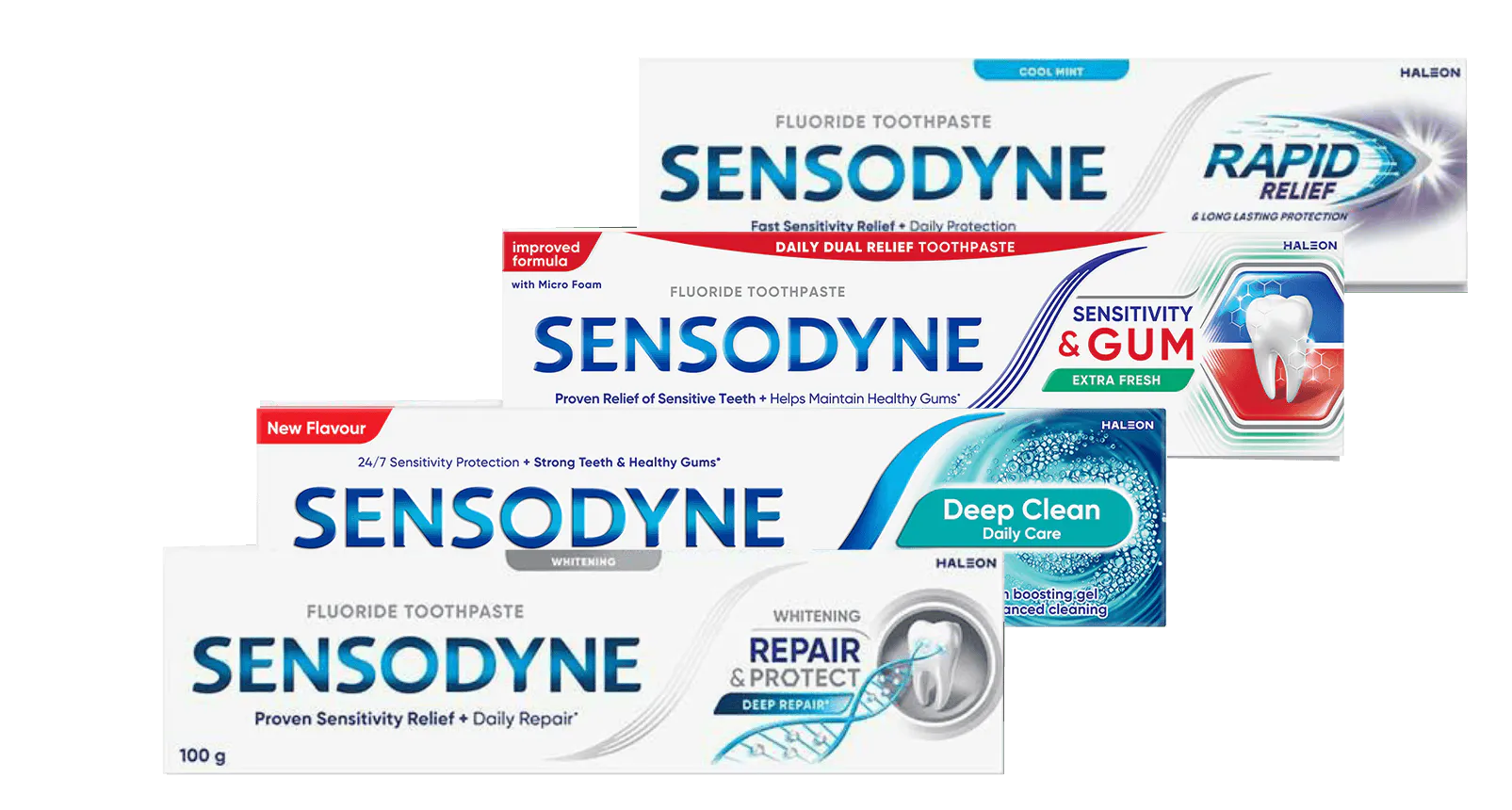
Found in Sensodyne Toothpaste Facts (in European, Asian, and select international markets), NovaMin represents a breakthrough in biomimetic dental repair.
NovaMin is a patented bioactive glass composed of Calcium Sodium Phosphosilicate. Originally developed for bone regeneration in orthopedic surgery, it actively repairs teeth:
- Activation: When NovaMin comes into contact with saliva during brushing, it rapidly releases sodium ions, temporarily raising the local pH.
- Ion Release: The particle then releases massive amounts of calcium ($Ca^{2+}$) and phosphate ($PO_4^{3-}$) ions.
- Crystallization: These ions precipitate over the exposed dentin and inside the open tubules, crystallizing into a hard, protective Hydroxyapatite-like layer (the natural mineral makeup of teeth). This physically blocks the tubules, permanently stopping the fluid shifts that cause pain.
4. Stannous Fluoride Science: Smear Layers and Enamel Protection
Found in Sensodyne Rapid Relief and US variants of Repair & Protect, Stannous Fluoride (0.454% $SnF_2$) delivers rapid occlusion and superior enamel defense.
- Rapid Tubule Occlusion: Stannous fluoride reacts instantly with the calcium in the tooth to form a robust, insoluble microscopic “smear layer” composed of tin, zinc, phosphate, and calcium over exposed dentin tubules. This provides clinically proven pain relief in as little as 60 seconds.
- Anti-Microbial & Anti-Gingivitis: Unlike standard Sodium Fluoride, the stannous (tin) ion possesses potent natural antibacterial properties, inhibiting plaque toxicity and preventing gingivitis (gum disease).
5. Relative Dentin Abrasivity (RDA) and Shelf-Life Physics
Therapeutic toothpaste must clean effectively without further damaging vulnerable enamel or exposed dentin.
- Low RDA Formulation: Sensodyne toothpastes are formulated with specialized, ultra-fine hydrated silica. They boast a Low Relative Dentin Abrasivity (RDA) score (typically between 35 and 70, well below the FDA safety limit of 250). This guarantees extremely gentle plaque removal without abrasive scratching.
- Factory Shelf Life: Due to stable fluoride and potassium salts, unopened Sensodyne toothpaste maintains an official shelf life of 24 to 36 months from the manufacturing date under ambient storage conditions (15°C to 25°C).
Sensodyne Toothpaste Facts FAQ
Disclaimer: Unless otherwise stated, the images used in this article are the property of their respective owners. We do not claim ownership of any third-party images featured, and they are used here strictly for informational and educational purposes. If you are the copyright holder and wish to have an image removed, please contact us.



