
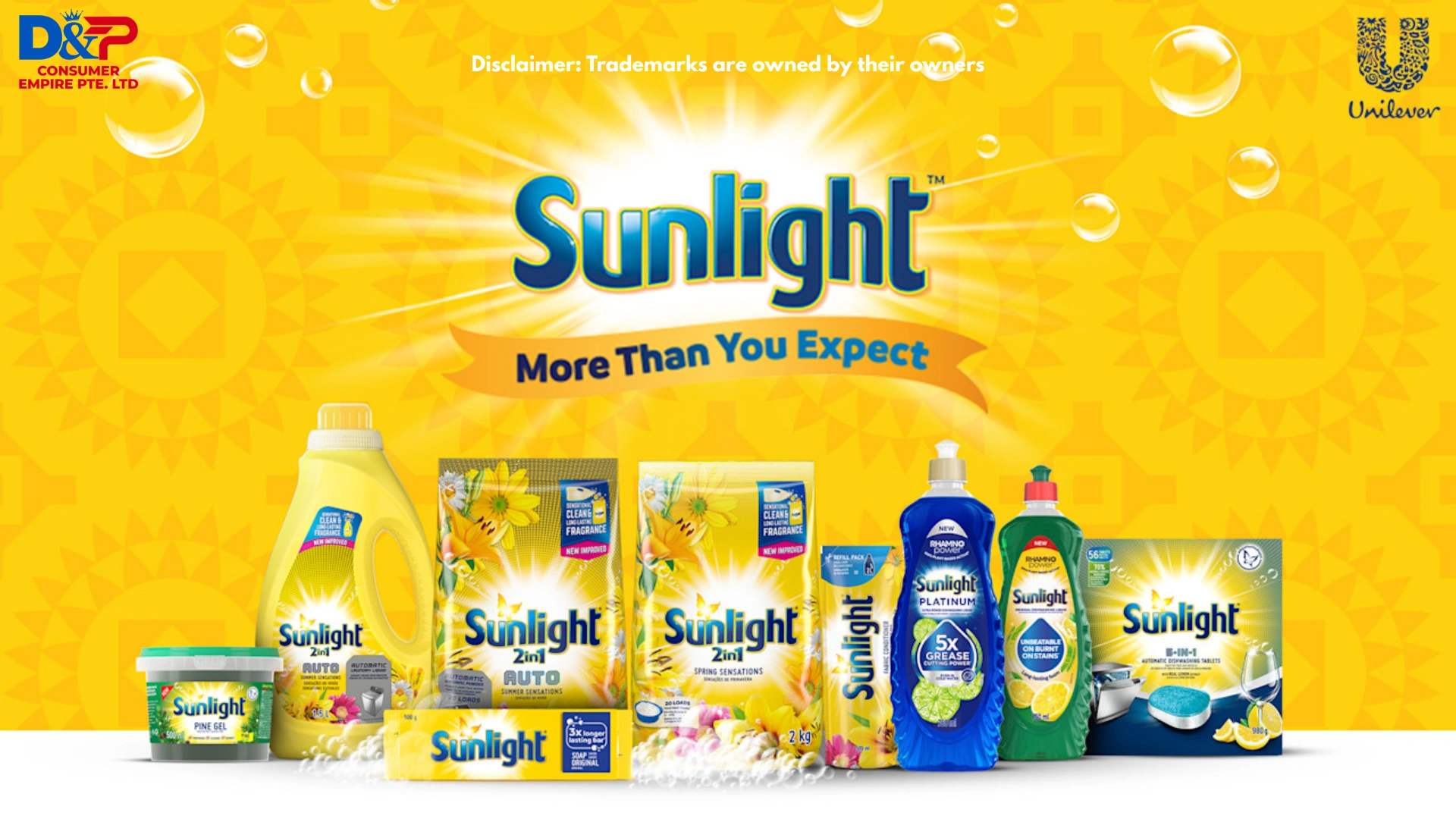

Evaluating Sunlight Dishwash Liquid Facts provides essential technical data for B2B home care buyers, commercial kitchen suppliers, chemical formulators, product developers, and retail category managers. Understanding the surfactant chemistry, grease-cutting mechanics, foam density, dermatological compatibility, and pH stability of Sunlight dishwash liquid is critical when evaluating cleaning performance and regulatory compliance for international distribution.
Sunlight represents one of the world’s most scientifically tested household cleaning brands. Built upon continuous surfactant and enzyme innovations since its origin in 1884, Sunlight liquid formulas combine powerful anionic and amphoteric degreasing agents with natural citrus extracts. This technical guide analyzes the chemical, physical, and performance facts governing Sunlight dishwash liquid formulations.
Table of Contents
- The Innovation History and Heritage of Sunlight Cleaners
- Surfactant Degreasing Chemistry: Anionic Matrix and Micellar Solubilization
- Natural Citrus Power: Lemon and Lime Extract Mechanics
- Quick-Rinse Technology, Foam Stability, and Surface Compatibility
- Dermatological Mildness, pH Calibration, and Shelf-Life Physics
- Frequently Asked Questions (FAQ)

1. The Innovation History and Heritage of Sunlight Cleaners
Sunlight was introduced in 1884 by William Hesketh Lever in the United Kingdom as the world’s first packaged branded laundry and household soap. Formulated to make household hygiene accessible and effective, Sunlight established Lever Brothers (later Unilever).
In the mid-20th century, as synthetic detergent chemistry advanced, Unilever transitioned Sunlight into a high-performance liquid dishwashing detergent. Today, Sunlight liquid body and dish cleansing formulas integrate advanced Quick Rinse technology with real citrus extracts to eliminate stubborn food grease rapidly without leaving chemical residue.
2. Surfactant Degreasing Chemistry: Anionic Matrix and Micellar Solubilization
Sunlight dishwash liquid cleans dirty kitchenware through an engineered multi-surfactant matrix designed to emulsify insoluble animal fats, plant oils, and burnt-on food soils:
Primary Anionic Surfactant (Linear Alkylbenzene Sulfonate – LAS)
LAS provides high surface activity, reducing water surface tension from 72 dynes/cm down to under 30 dynes/cm. The hydrophobic hydrocarbon tail attaches to grease droplets, while the hydrophilic head interacts with rinse water, rolling grease up into microscopic emulsion droplets (micelles).
Co-Surfactant System (Sodium Laureth Sulfate – SLES & CAPB)
- Sodium Laureth Sulfate (SLES): Generates rich, creamy foam stability and provides rapid wetting action across stainless steel, glass, and plastic surfaces.
- Cocamidopropyl Betaine (CAPB): An amphoteric co-surfactant derived from coconut fatty acids that mitigates primary surfactant harshness, improving hand mildness while stabilizing foam against soil load breakdown.
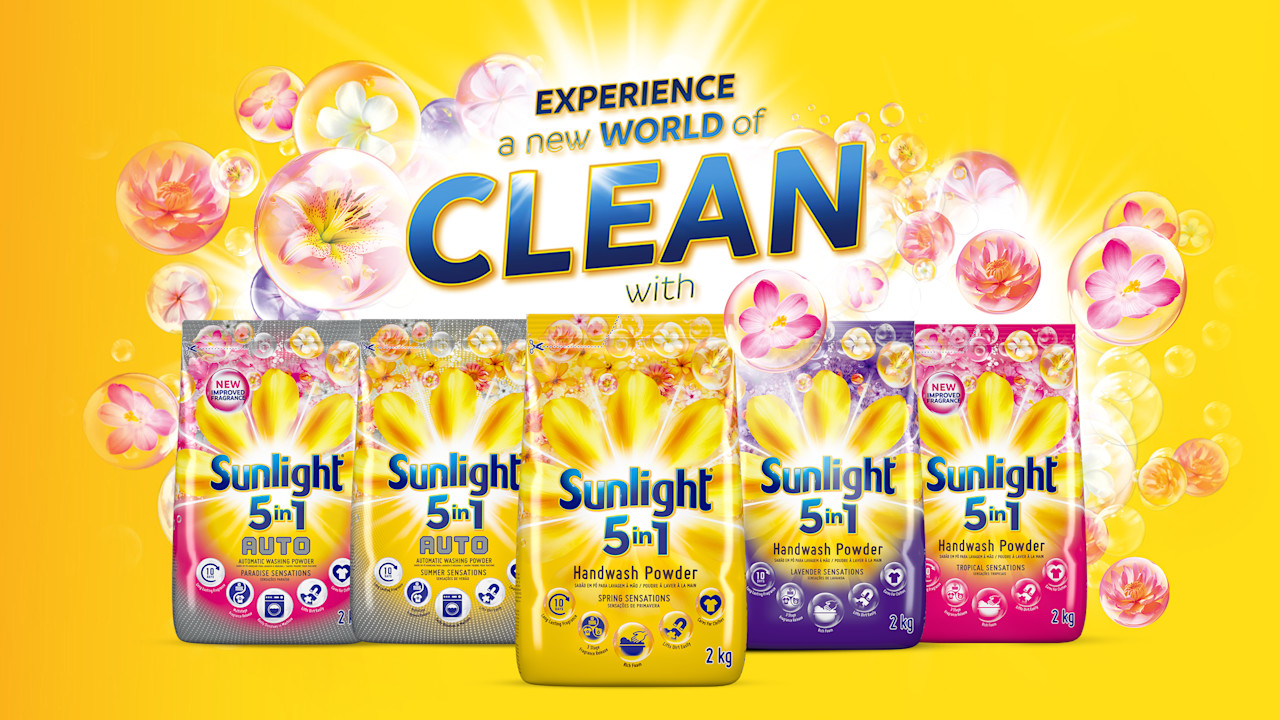
3. Natural Citrus Power: Lemon and Lime Extract Mechanics
Sunlight’s signature cleaning authority stems from its integration of real citrus juice extracts (lemon and lime):
[Greasy Dishware Surface]
           │
           ▼
[Citrus Terpenes & LAS Surfactants] ──► Dissolve Hydrophobic Lipid Bonds
           │
           ▼
[Micellar Encapsulation]            ──► Lifts Grease Droplets into Suspension
           │
           ▼
[Quick-Rinse Water Polymer]        ──► Rinses Clean with Zero Residue
- D-Limonene Solvent Action: Natural citrus peel extracts contain d-limonene, a naturally occurring terpene solvent. D-limonene penetrates and dissolves tough, polymerized cooking oil and animal fat deposits that resist basic water-based cleaning.
- Aromatic Odor Neutralization: Active citrus essential oils neutralize fishy, garlic, and onion odors on kitchenware, replacing malodors with a clean, uplifting citrus fragrance.
4. Quick-Rinse Technology, Foam Stability, and Surface Compatibility
Commercial kitchens and household users demand fast rinsing performance to save water and time:
- Quick-Rinse Polymer Matrix: Sunlight incorporates hydrotrope solubilizers (such as Sodium Cumene Sulfonate) that prevent surfactant molecules from re-depositing onto washed surfaces during rinse cycles. Rinse water sheets off dishes smoothly, leaving zero chemical film or spotty streaks.
- Surface Versatility: Formulated to clean safely across porcelain, flint glass, stainless steel, non-stick cookware, and food-grade plastic containers without dulling surface finishes or causing stress cracking.
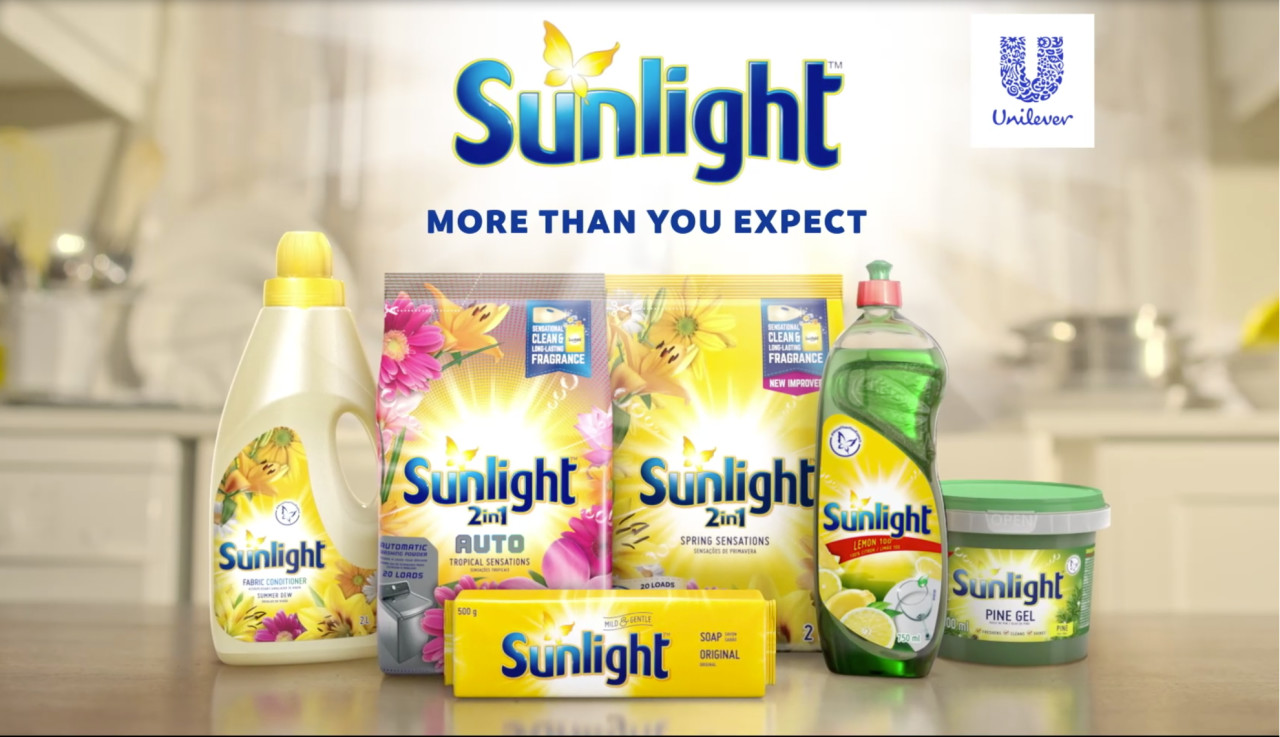
5. Dermatological Mildness, pH Calibration, and Shelf-Life Physics
Sunlight dishwash liquid balances aggressive fat-stripping power with hand safety:
- Skin-Compatible pH Calibration: Sunlight dishwash liquid is calibrated to a neutral pH range of 6.0 to 7.5, preserving the skin’s natural protective lipid mantle during manual dishwashing.
- Viscosity Stabilization: Polymer thickeners and sodium chloride maintain a pourable liquid viscosity of 1,200 to 2,500 cPs, preventing thinning under warm ambient storage.
- Factory Shelf Life: Unopened products maintain an official factory shelf life of 24 to 36 months from the manufacturing date when stored away from direct sunlight between 5°C and 35°C.
Evaluating Sunlight Dishwash Liquid Facts FAQ
Disclaimer: Unless otherwise stated, the images used in this article are the property of their respective owners. We do not claim ownership of any third-party images featured, and they are used here strictly for informational and educational purposes. If you are the copyright holder and wish to have an image removed, please contact us.



